



 Child Abuse Signs UK: When Silence, Control and Fear Are the Warning Signs
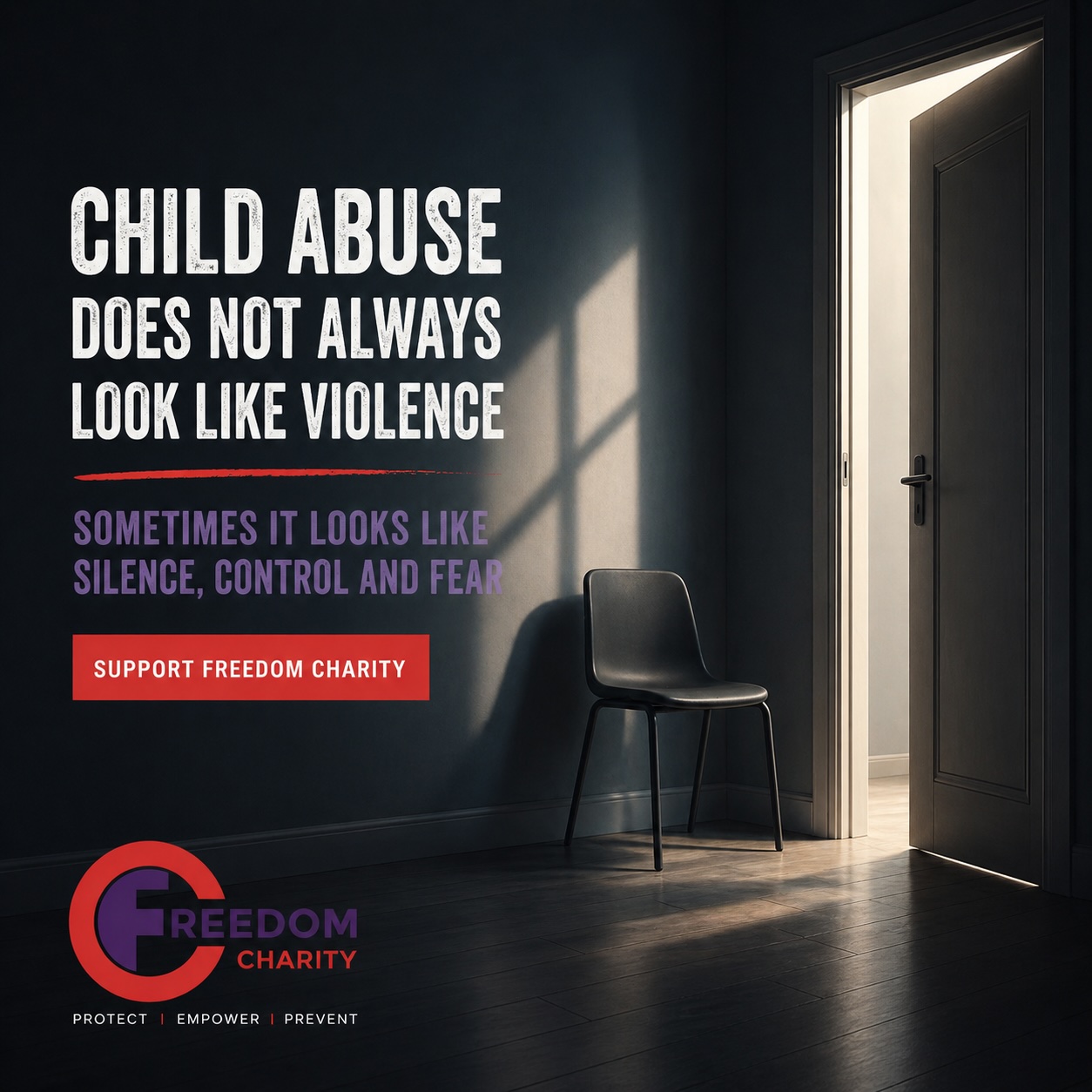
Child abuse signs in the UK are not always visible. Abuse does not always look like violence. Sometimes it looks like silence, obedience, fear, control, isolation or a child being told that family reputation matters more than their safety.
Forced marriage, FGM and dishonour abuse are safeguarding issues. They are not private family matters, cultural misunderstandings or harmless traditions. Therefore, adults must recognise the warning signs and act when a child may be at risk.
April is Child Abuse Awareness Month. However, children do not become safer because a campaign month ends.
Freedom Charity works to protect children and young people from forced marriage, FGM and dishonour abuse. These harms often hide behind family pressure, secrecy, travel plans and fear. For that reason, safeguarding adults must look beyond visible injury and notice patterns of control.
A child may attend school, smile and say very little. Behind that silence, speaking honestly may feel too dangerous.
Child abuse awareness must move beyond posters and slogans. It must help adults see hidden harm before it becomes irreversible.
What are the signs of child abuse in the UK?
Child abuse can include physical abuse, emotional abuse, sexual abuse and neglect. It can also include exploitation, coercion and controlling behaviour within a family or community setting.
Some signs appear obvious. Others sit quietly in a child’s behaviour.
A young person may become withdrawn, anxious or unusually compliant. They may fear mistakes, avoid talking about home, miss school, lose confidence or become isolated from friends.
In many cases, the warning sign is not injury. It is control.
Relatives may monitor a child, check their phone, restrict friendships or prepare them for unexplained travel. A child may also speak about marriage, shame, reputation or family pressure. One sign alone may not prove abuse. However, a pattern of fear or control should never be dismissed.
Forced marriage is a safeguarding issue
Forced marriage is not the same as arranged marriage. An arranged marriage requires free and full consent. Forced marriage involves pressure, coercion or abuse.
A child cannot freely consent to a forced marriage.
Warning signs may include sudden talk of engagement, unexplained travel plans, withdrawal from school, family surveillance, fear of disappointing relatives or threats linked to reputation.
Professionals should not treat these signs as ordinary family disagreement. In the wrong context, they may indicate serious risk.
FGM is abuse and a criminal offence
Female genital mutilation is child abuse and a form of violence against women and girls. It is also a criminal offence.
In England and Wales, regulated health and social care professionals and teachers must report known cases of FGM in girls under 18 to the police.
FGM is not a tradition that professionals can ignore. It is a safeguarding and criminal justice issue.
Possible warning signs include anxiety about travel, talk of a special ceremony, absence from school, pressure from extended family or distress after returning from abroad. Therefore, adults should act before harm happens, not after.
Dishonour abuse is about control
Freedom Charity uses the term dishonour abuse because there is no honour in abuse.
Dishonour abuse may include threats, forced marriage, FGM, coercive control, isolation, surveillance, sexual abuse, financial control or immigration-related abuse. Although cases may involve different criminal offences, the common thread is control.
Adults may describe that control as family concern, faith, culture, discipline or reputation. Safeguarding must look past those explanations and ask one direct question.
Is the child safe?
Child abuse can hide behind obedience
One dangerous myth about child abuse is that it must look dramatic before adults take it seriously.
Many children do not shout for help. Instead, they adapt. They become quiet, careful and watchful. Over time, they learn what not to say.
As a result, obedience can be misunderstood.
A frightened child may look respectful. A controlled child may look protected. A child facing forced marriage or FGM may appear to be going on a normal family holiday.
That is why professionals, neighbours, relatives and friends must take patterns seriously.
What should you do if a child may be at risk?
You do not need courtroom-level proof before seeking safeguarding advice.
Call 999 if a child is in immediate danger.
Where the risk is not immediate but you feel concerned, contact children’s social care, the police, a school safeguarding lead or the NSPCC helpline. If the concern involves forced marriage, professionals can also seek advice from the Forced Marriage Unit.
Do not confront the family if doing so may increase risk.
Do not mediate.
Do not promise secrecy.
Instead, record the concern clearly and use the correct safeguarding route.
Why Freedom Charity is speaking now
Freedom Charity was founded to help protect children and young people from forced marriage, FGM and dishonour abuse.
Our work rests on a simple principle: children must be protected before harm becomes irreversible.
Awareness months can help. However, they cannot carry the whole weight of child protection. At the end of April, the message should not be that awareness is over. The message should be that vigilance must continue.
Child abuse does not always announce itself. Sometimes it hides in obedience, silence and fear.
The child who says least may be the child most in need of protection.
FAQs
What are the main child abuse signs in the UK?
Child abuse signs in the UK can include fear, withdrawal, unexplained injuries, poor attendance, sudden behaviour change, isolation, control by adults, or anxiety about travel, marriage, shame or family reputation.
Are forced marriage and FGM child abuse?
Yes. Where a child faces forced marriage or FGM, adults should treat this as a safeguarding concern. FGM is also a criminal offence.
What is dishonour abuse?
Dishonour abuse is abuse linked to control, shame, reputation or perceived family honour. It may include threats, forced marriage, FGM, coercive control, surveillance, emotional abuse, sexual abuse, financial control and isolation.
Do I need proof before reporting child abuse concerns?
No. Adults do not need proof before seeking safeguarding advice. If a child may face risk, record the concern and refer it through the correct safeguarding route.
What should I do if a child is in immediate danger?
Call 999. If the concern is not immediate, contact children’s social care, the police, a school safeguarding lead, the NSPCC helpline or the Forced Marriage Unit where forced marriage may be involved.
Donate to support a freedom charity
Aneeta Prem, London, 30 April 2026