



Professionals
Freedom Charity · Professional training
Forced Marriage & FGM Training for Professionals
The first response matters.
Training for professionals who may have to act on forced marriage, FGM and related abuse. We use current law, reported cases and realistic scenarios to work through what to ask, what not to do, when to escalate and when a well-meant response could increase the risk.
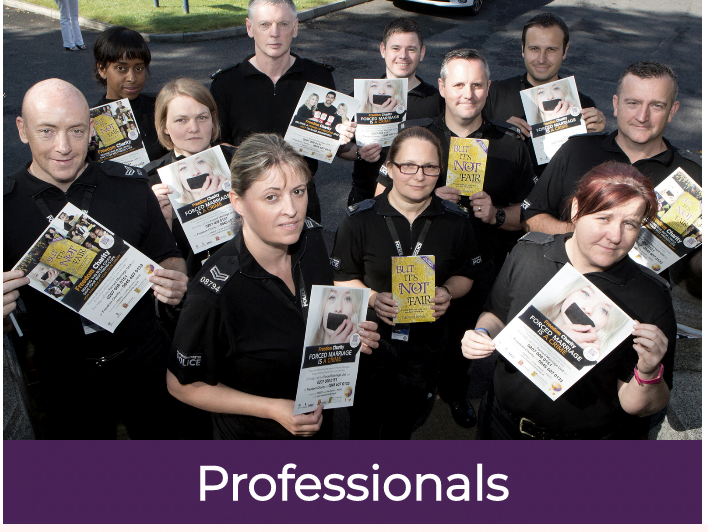
Professional training
Training for safer professional responses
Knowing the definition is not enough. In practice, someone may have minutes to decide whether a person is safe, whether family contact could increase the danger, whether apparent agreement is really free consent, or whether a disclosure that has been withdrawn should still concern them.
Who the training is designed for
Police, education, social care, health, local authorities, universities, justice and legal professionals, safeguarding partnerships, public bodies, employers and charities.
What the training aims to develop
A clearer grasp of the law, the warning signs that matter, the questions to ask and the actions that can make a situation safer or more dangerous.
Built for your team
We do not use one presentation for every audience. A teacher, police officer, social worker, clinician and legal decision-maker face different questions, so the training should reflect the work they actually do.
Why Freedom
Specialist knowledge and established educational resources
Freedom Charity has worked on forced marriage and FGM since 2009. Our education work includes PSHE Association Quality Mark resources, professional safeguarding training and published educational material.
A safeguarding lead, police officer, teacher, clinician and legal adviser do not face the same decisions. We train to the role.
Core practice
Recognise, respond, protect
- see the person alone where it is safe to do so;
- establish immediate danger and whether the person can speak safely;
- use open, non-leading questions;
- explain confidentiality and its limits;
- record the person’s own words accurately;
- consider multiple perpetrators, siblings and other people at risk;
- use an independent accredited interpreter where needed;
- follow statutory and organisational safeguarding procedures;
- share information lawfully and proportionately where needed to protect someone;
- do not promise an outcome that your role cannot deliver.
By profession
What the issues mean for you
Police
Consider the whole pattern, not just the latest incident. Preserve digital/travel evidence, identify connected suspects, use specialist HBA/FGM/FM expertise, consider FMPOs/FGMPOs and build evidence-led cases where victims are frightened or reluctant.
Social workers
Map family-network risk, use child/adult safeguarding powers, consider siblings and adults at risk, coordinate strategy discussions and avoid mediation with alleged perpetrators.
Teachers & DSLs
Understand forced-marriage travel risk, FGM mandatory reporting, safe handling of disclosures and when parental contact is unsafe.
Doctors, nurses & midwives
Recognise FGM, sexual and reproductive coercion, virginity-testing pressure, capacity and mental-health impact; fulfil mandatory-reporting and wider safeguarding duties.
Universities
Adult students may face forced marriage, family surveillance, financial control and overseas abandonment. Student-support and safeguarding teams need clear referral routes.
Justice & legal professionals
Apply the law to difficult facts: arranged and forced marriage, apparent consent, retraction, multiple perpetrators, overseas risk, FMPOs and FGMPOs, breaches, coercive control, expert evidence and proportionality. For legal audiences, Freedom can build case-based learning around reported judgments, including cases where protection succeeded and cases where allegations were not proved or orders went too far.
Employers
Recognise unexplained absence, workplace surveillance, control of earnings and family attendance at work as possible safeguarding indicators.
Community & faith bodies
Reject coercion, do not mediate active safeguarding cases and know when to refer to statutory agencies.
Policy teams
Use precise definitions, distinguish police-recorded crime from prevalence, and test whether policy changes improve identification, protection and prosecution.
Law and orders
The essentials professionals should know
Forced marriage is criminalised across the UK. In England and Wales, FMPOs can be obtained urgently and breach carries up to five years’ imprisonment.
FGM is illegal and FGMPOs provide civil protection; core FGM offences can carry up to 14 years. The England and Wales FGM mandatory-reporting duty applies to defined known cases involving girls under 18 encountered by specified professionals.
Virginity testing and hymenoplasty are illegal across the UK. The Crime and Policing Act 2026 contains provisions for statutory guidance and a definition of “honour-based abuse” (sections 143–144). Legislation.gov.uk currently marks these sections prospective; check commencement before relying on them as operative duties. They do not create a standalone honour-based abuse offence.
Official sources
Check the law behind the training.
Professionals should use the law and guidance that apply to their role and nation. These official sources distinguish criminal offences, civil protection orders, mandatory reporting and safeguarding decisions.
Forced marriage protection
HMCTS guidance on FMPOs covers applications, emergency orders and breach in England and Wales. See Freedom’s forced marriage guide for warning signs, overseas risks and safeguarding context.
FGM reporting
Home Office procedural guidance explains the specific mandatory-reporting duty in England and Wales. Suspected risk and defined known cases must not be confused. Freedom’s FGM guide explains risk, law, protection and routes to help.
Virginity testing and hymenoplasty
Government multi-agency guidance explains the UK-wide offences and safer professional responses.
Dishonour Abuse and statutory terminology
Freedom uses Dishonour Abuse. The Crime and Policing Act 2026, sections 143–144, uses the term “honour-based abuse” for statutory guidance and its accompanying definition. The provisions do not establish a standalone HBA offence.
Case-based learning
Learn from what succeeded — and what failed.
For specialist and legal audiences, Freedom can build learning around reported forced-marriage and FGM cases. That includes cases where protection was necessary, and cases where allegations were not proved, expert evidence was insufficient, risk assessments relied too heavily on assumption, or protective orders went further than the evidence justified.
This matters because good safeguarding requires judgment in both directions: recognise coercion and risk early, but do not replace evidence with assumptions about culture, ethnicity, religion or family background.
Case examples are used to improve practice and decision-making. Prosecution or protection-order numbers should never be presented as a measure of prevalence.
Justice and legal professionals
Law, evidence, risk and decision-making
Freedom can develop specialist learning for judges, magistrates, legal advisers and lawyers using legislation, reported cases and realistic decision points. The aim is practical: to help people test the evidence, recognise coercion, assess risk and use protective powers without replacing judgement with assumption.
The cases matter because they show both sides: where protection was needed, and where allegations were not proved, expert evidence was weak, risk had changed or an order went further than the evidence justified.
For judicial and legal audiences, the commissioning body keeps control of the educational framework and final material. Freedom supplies the specialist subject knowledge and case material.
Commission training
Choose a starting point for your team.
These are suggested formats, not one-size-fits-all courses. We confirm content, dates, trainer availability, delivery arrangements and a written quotation with each commissioning organisation before booking.
Safeguarding essentials
Suggested format: 90 minutes, online. For schools, employers, charities and frontline staff. Learn to recognise warning signs of forced marriage, FGM and related abuse, respond safely to a disclosure, avoid dangerous family contact and identify appropriate referral routes.
Practitioner case workshop
Suggested format: half day, online or in person. For designated safeguarding leads and health, social care, police or justice teams. Work through role-specific scenarios involving law, evidence, confidentiality, escalation, protective options and sound professional judgement.
Organisation-wide learning
Suggested format: tailored briefing and workshop, with agreed follow-up resources. For academy trusts, universities, local authorities and larger employers. We scope the audience, decisions staff face, safeguarding procedures and practical learning measures together.
Fees: quoted according to preparation, audience, length, group size, travel and follow-up requirements. We do not advertise CPD accreditation unless it has been confirmed for the particular provision.
Plan professional learning
How Freedom trains
We start with one question: what does your team need to get right? From there we build the session around the law, the safeguarding context, the decisions people actually face and realistic cases they can work through.
Before
Tell us who is attending, what situations they face and what you want them to be able to do differently afterwards.
During
Work through realistic cases: what matters, what needs checking, what can safely be shared and which well-meant responses could make things worse.
After
People should know what they would do differently. Where useful, we can test the learning, gather feedback and refine the material rather than treating attendance as the outcome.
Tell us what your team needs to get rightSchools and education
Training
What good training should change
Freedom has worked on forced marriage and FGM since 2009, combining education, safeguarding and legal-policy work. Our education experience includes PSHE Association Quality Mark resources, professional safeguarding training, published materials for young people and specialist resources for different audiences.
That experience matters only if it changes practice. Our aim is not to leave people with more information; it is to help them make safer, more confident decisions when a real case lands in front of them.
Different audiences require different learning. Material for young people, frontline professionals and legal decision-makers should not be the same presentation with a different title.
Training complements — and does not replace — statutory duties, local procedures or current government guidance. Freedom will not imply CPD or other accreditation unless it has been specifically confirmed for the session.
Before you enquire
Common training questions.
Can sessions be tailored to our team?
Explain who is attending and what decisions they need to make. Police officers, teachers, social workers, clinicians and employers have different duties, so one generic response is not enough.
Does a course replace our local procedure?
No. Training must sit alongside current law, professional obligations, local safeguarding procedures and your organisation’s escalation arrangements.
What about accreditation?
Ask Freedom what, if any, certification is available for the proposed session. Do not assume CPD or another accreditation applies unless it has been specifically confirmed.
How do we arrange training?
Contact Freedom with your organisation, location, intended audience, topics and approximate group size. The team can discuss the appropriate format and confirm current availability and arrangements.
Freedom Charity
Built to be checked.
Freedom Charity was co-founded in 2009 by Aneeta Prem MBE and Lord Toby Harris. The charity’s public record connects safeguarding, education, books, technology, campaigns, professional training, policy and routes to help. Where Freedom reports its own reach, it labels it as Freedom data; where an external source verifies a milestone, the source is linked.
Independent records include Aneeta Prem’s evidence to Parliament in 2013 and reporting on Freedom’s Red Triangle campaign in 2017.