



Forced Marriage and FGM Holiday Risk: What Must Be Noticed Before the Summer Break
Forced marriage and FGM holiday risk: 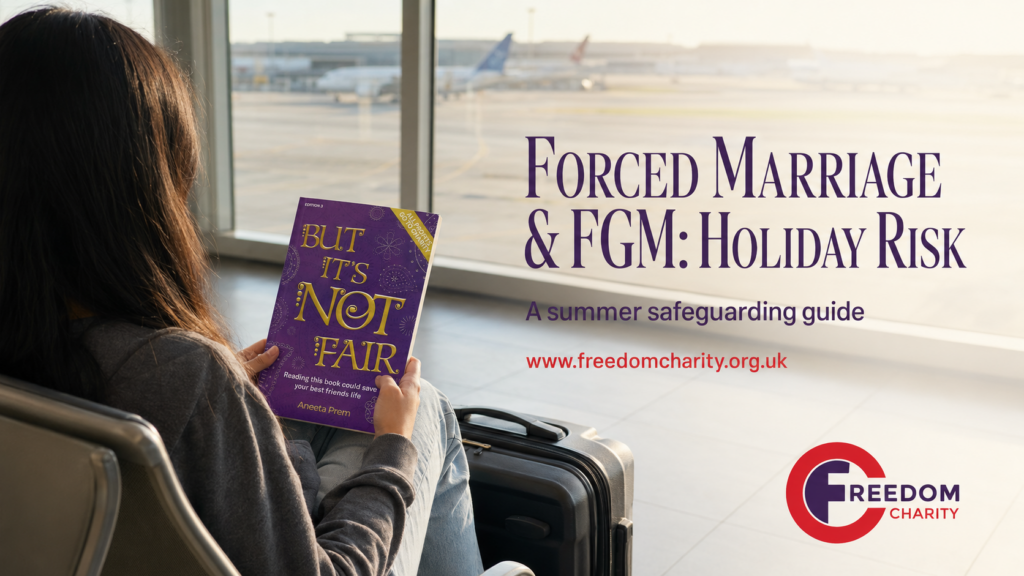 For some children, the final school bell does not signal freedom. Instead, it marks the moment their protection becomes more difficult.
A journey presented as a family holiday may place a child at risk of forced marriage or female genital mutilation. Some children may travel without understanding the real purpose of the trip. Others may sense that something is wrong but feel too frightened to speak.
Summer travel is not itself a warning sign. Families travel for countless ordinary and positive reasons. However, concern arises when a journey involves fear, secrecy, pressure, unexplained ceremonies or the possibility that a child may not return.
The forced marriage and FGM holiday risk must therefore be considered before schools close. A teacher, friend, social worker, police officer or health professional may have one final opportunity to notice the danger.
“A child should never have to disappear from a classroom before adults decide that their fear was real. The final weeks before a holiday may be our last chance to hear them, believe them and act.”
Aneeta Prem MBE, Founder of Freedom Charity
Need help now?
If someone is in immediate danger, call 999.
At an airport, approach the police, Border Force, airport security or a member of staff. Ask to speak privately.
Do not confront the family or reveal that the person has asked for help. These actions could increase the danger.
For confidential safeguarding support, contact the Freedom Charity helpline.
Forced marriage and FGM holiday risk in the UK
Forced marriage and FGM are serious forms of abuse. They are not private family matters, cultural misunderstandings or lifestyle choices.
At Freedom Charity, we use the term dishonour abuse. There is no honour in controlling, threatening or harming somebody to protect a family’s perceived reputation.
The latest figures demonstrate why early action matters. In 2025, the Forced Marriage Unit received 1,295 contacts concerning possible forced marriage or FGM.
The unit provided tailored assistance in 406 cases. Among them, 391 concerned forced marriage. A further 15 concerned FGM where the victim or potential victim was overseas.
Most importantly, children aged 17 or under accounted for 163 cases, or 40 per cent of the total. British nationals, including dual nationals, represented 64 per cent of victims.
Moreover, 58 cases had no overseas element. Therefore, professionals must recognise that forced marriage can happen abroad or entirely within the UK.
The figures cover only cases that people reported to the Forced Marriage Unit. As a result, they cannot reveal the full extent of this hidden abuse. Changes to recording practices also prevent direct comparison between the 2025 total and figures from previous years.
Read the official Forced Marriage Unit statistics for 2025.
What is forced marriage?
A forced marriage is one in which one or both people do not consent, or cannot consent, and pressure or abuse is used.
Physical violence is not necessary. Coercion may include:
- emotional manipulation
- threats and intimidation
- financial control
- isolation
- surveillance
- confiscation of a passport or telephone
- threats against relatives
- pressure connected to sexuality or disability
- claims that refusal will disgrace the family
An arranged marriage is different. In an arranged marriage, both people remain free to accept or refuse.
In England and Wales, nobody under 18 can legally marry or enter a civil partnership. The law also makes it an offence to do anything intended to cause a child to marry before their eighteenth birthday. In those cases, prosecutors do not need to prove coercion.
Furthermore, taking someone overseas to force them into marriage is a criminal offence.
Learn more about forced marriage and the right to choose.
What is female genital mutilation?
Female genital mutilation, or FGM, involves injuring or altering female genital organs for non-medical reasons.
FGM offers no health benefit. Instead, it can cause severe pain, bleeding, infection and psychological trauma. Survivors may also experience sexual health problems and complications during childbirth. In the most serious cases, FGM can result in death.
UK law prohibits FGM. The law also prohibits taking a girl abroad for FGM or helping somebody to arrange it.
Furthermore, no religion requires FGM. Adults must never excuse it as tradition or culture.
Professionals should respond sensitively and avoid stigmatising survivors or entire communities. However, fear of appearing culturally insensitive must never prevent lawful safeguarding action.
Read Freedom’s information about female genital mutilation.
If you are frightened about a holiday or ceremony
You may have been told that you are going on an ordinary holiday. However, you might suspect that there is another reason for the journey.
Perhaps somebody has mentioned a marriage, engagement or special ceremony. Your passport or telephone may be taken from you. Alternatively, a relative might have warned you not to tell anyone.
Trust your instincts. You do not need proof before asking for help.
Forced marriage and FGM are not your fault. Nobody has the right to force you into marriage or arrange for you to undergo FGM.
If you can do so safely:
- tell a teacher or designated safeguarding lead
- speak to a social worker, police officer or doctor
- explain why you feel frightened
- provide the proposed travel date and destination
- mention any wedding, engagement or ceremony
- say whether someone may take your passport or telephone
- explain if you fear that you will not return
- ask to speak without relatives present
- mention any siblings who may also face risk
You can say:
“I am frightened about this journey. I think I may be taken abroad for forced marriage or FGM. Please do not contact my family before obtaining specialist safeguarding advice.”
You do not have to explain everything perfectly. A partial disclosure still matters.
If you are already at an airport
Approach a police officer, Border Force officer, security officer or member of airport staff.
Say clearly:
“I am being taken abroad against my will. I am afraid I may be forced into marriage.”
If you fear FGM, say:
“I am frightened that I may be taken abroad for FGM. I need help away from my family.”
Ask to speak privately. Where you can safely use a telephone and the danger is immediate, call 999.
Protect your digital safety
Only search for help from a device you believe is safe.
A relative may monitor your telephone, messages, location or online accounts. Therefore, avoid storing plans or messages where somebody may find them and place you in greater danger.
Suddenly deleting information or changing settings may also alert a person who monitors your device. Instead, use a trusted person’s telephone or another safe device wherever possible.
If you are worried about a friend
Your friend may tell you directly that they feel frightened. Alternatively, you may notice anxiety about a holiday, wedding or ceremony.
Take the concern seriously.
You should:
- listen without judging
- believe what your friend tells you
- encourage them to speak to a trusted professional
- tell a teacher or designated safeguarding lead
- share any travel information you already know
- explain if your friend may be leaving soon
- call 999 if the danger is immediate
Do not:
- approach the family
- contact relatives or community representatives
- investigate independently
- post information online
- share the disclosure with other friends
- promise to keep the information completely secret
- wait until your friend has travelled
You may worry that telling an adult will betray your friend. However, keeping a dangerous secret could leave them without protection.
Try saying:
“I believe you. This is not your fault. Because I am worried about your safety, we need to tell someone who can help.”
Sometimes fear causes a person to withdraw a disclosure. Consequently, you should not assume that the danger has disappeared if your friend changes their story.
Report the original concern to a trusted professional.
Warning signs before a school holiday
Warning signs rarely come with clear labels. A child may reveal only fragments of what is happening.
Possible indicators include:
- sudden anxiety about an overseas trip
- uncertainty about the destination or return date
- requests for extended leave
- talk of a special ceremony or family obligation
- an unexpected engagement or wedding
- relatives arriving from overseas
- fear about the end of term
- unusual secrecy, distress or withdrawal
- increased control by relatives
- loss of a passport, telephone or access to money
- a child saying that they will not return to school
- siblings who previously disappeared from education
- references to becoming a woman, purity or preparation for marriage
- a girl expressing fear that she may undergo FGM
One sign alone does not prove abuse. Nevertheless, several indicators may point to serious risk when considered together.
A child might disclose gradually, contradict themselves or withdraw what they have said. Consequently, professionals must never dismiss a hesitant disclosure.
When a student does not return
A student who fails to return after a holiday may appear to present an attendance problem. However, the absence could indicate forced marriage, FGM or another form of abuse.
Where safeguarding concerns exist, schools must look beyond routine attendance procedures.
Staff should ask:
- Did the child appear anxious about travelling?
- Did the family confirm a return date?
- Did anyone request extended leave?
- Did the child mention a marriage or ceremony?
- Did staff record earlier concerns?
- Are siblings also absent?
- Can the school contact the child safely?
By the time a pupil fails to return, professionals may have lost the best opportunity to protect them. The flight may have left. A marriage may have taken place. Someone may already have subjected a girl to FGM.
How schools should respond
School staff do not need proof before raising a safeguarding concern.
Where warning signs appear, staff should:
- speak to the child privately
- listen carefully and without judgement
- record the child’s exact words
- note travel dates, destinations and names
- alert the designated safeguarding lead
- follow child protection procedures immediately
- consider the safety of siblings
- seek specialist advice
- refer concerns to children’s social care or the police where appropriate
- escalate the matter if the initial response does not address the risk
Importantly, professionals should not:
- approach the family without safeguarding advice
- arrange a family meeting
- attempt mediation
- involve community leaders as intermediaries
- ask relatives to interpret
- promise complete confidentiality
- wait for certainty
- assume that parental approval makes a child marriage lawful
- contact relatives overseas to investigate
Premature contact with the family may increase surveillance or accelerate travel. Consequently, every decision must place the child’s safety first.
The role of police, social care and health professionals
Forced marriage and FGM require a child-centred, multi-agency response.
One service may hold information that appears limited. However, concerns can become highly significant when professionals bring information together.
They should consider:
- how soon the person may travel
- whether anyone has obtained tickets or passports
- whether relatives have used threats or coercion
- whether somebody monitors the person’s communications
- whether siblings also face danger
- whether abduction presents a risk
- whether the family knows that the person has sought help
- whether the situation requires urgent legal protection
In England and Wales, the law also places a personal reporting duty on regulated health and social care professionals and teachers in certain known cases of FGM involving girls under 18.
The duty applies when a girl directly tells the professional that she has undergone FGM. It also applies when the professional visually identifies physical signs that appear to show FGM during their work.
Information from another person and concerns about future risk may fall outside that particular duty. Nevertheless, professionals must still act through the appropriate safeguarding procedures.
The statutory multi-agency guidance on FGM explains these responsibilities.
Finally, safeguarding and criminal law differ in some respects across the four UK nations. Professionals should follow the legislation and statutory guidance that apply in their jurisdiction.
Protection orders can help prevent harm
Nobody has to wait until a forced marriage or FGM has taken place before seeking protection.
In England and Wales, the family court can make:
- a Forced Marriage Protection Order, known as an FMPO
- a Female Genital Mutilation Protection Order, known as an FGMPO
Over many years, Freedom Charity has helped people and professionals understand and access these forms of protection. Consequently, this work has added a vital legal safeguard alongside education, disclosure and practical support.
Freedom does not replace a solicitor, the police, social care or the court. However, the charity can explain that protective action may be possible and connect people with appropriate services.
What can a Forced Marriage Protection Order do?
An FMPO can protect somebody who faces forced marriage. It may also help a person who has already experienced it.
Every order reflects the circumstances of the individual case. For example, the court may require someone to:
- surrender a passport
- stop travel arrangements
- reveal where a person is being kept
- end threats or intimidation
- avoid arranging or facilitating a marriage
- comply with other protective conditions
In an emergency, the court may consider an order without first notifying the people against whom the applicant seeks protection.
Breaching an FMPO constitutes a criminal offence.
What can an FGM Protection Order do?
An FGMPO may protect a girl or woman who faces FGM. The order can also help somebody who has already undergone it.
Depending on the circumstances, the court may prevent travel or require the surrender of passports. In addition, it can restrict the actions of people believed to be arranging or facilitating FGM.
Breaching an FGMPO also constitutes a criminal offence.
Neither type of order should delay emergency action. If someone faces immediate danger, call 999.
Airports are part of the safeguarding frontline
Freedom Charity has taken forced marriage and FGM awareness campaigns directly into airports. Through posters and safeguarding messages, the charity has reached travellers and professionals at a critical stage of the journey.
An airport may provide the final opportunity to protect a child before departure. Therefore, police, Border Force personnel and staff working within airport or airline safeguarding procedures should remain alert.
Possible warning signs include:
- a young person appearing frightened
- another person holding their passport
- relatives answering every question
- somebody preventing the young person from speaking privately
- uncertainty about the destination or return date
- inconsistent explanations about the journey
- references to an unexpected marriage or ceremony
- attempts to approach staff discreetly
No single indicator proves abuse. Nevertheless, staff should report concerns immediately through the airport’s safeguarding or police procedures.
Staff must not confront relatives or attempt mediation. Nor should they reveal that the person has asked for help.
Airport safeguarding resources
Freedom can support airports, airlines, police and Border Force teams with:
- forced marriage and FGM safeguarding posters
- Red Triangle Badges against FGM
- copies of But It’s Not Fair
- copies of Cut Flowers
- helpline and Freedom App information
- staff awareness materials
- professional training
Organisations can use these resources in staff training, safeguarding briefings and suitable information areas.
Contact Freedom Charity about airport safeguarding resources.
Why children need words before a crisis
Children cannot describe abuse if adults have never given them the language to recognise it.
That is why school education matters. It is not an optional addition to safeguarding.
A child may not say, “I am at risk of forced marriage.” Equally, a girl may not say, “I fear FGM.”
Instead, they may speak about travel, secrecy, pressure, shame or family expectations. Sometimes they reveal only part of what is happening.
Without the right education, even that disclosure may never come.
Girls need language before they need lawyers. Professionals need confidence before they need a court order.
PSHE books and safeguarding resources
Freedom Charity provides lesson plans that hold the PSHE Association Quality Mark. These resources help schools teach forced marriage and FGM safely, clearly and at an appropriate age.
But It’s Not Fair explores forced marriage, consent and coercion. Crucially, it explains the difference between an arranged marriage and a forced marriage.
Meanwhile, Cut Flowers helps young people understand FGM, its consequences and the importance of prevention.
These books do not simply decorate a classroom or library. Instead, they form part of practical safeguarding education.
Freedom has worked with more than 140 schools through assemblies, workshops, educational resources and safeguarding activity. As a result, children have received language that can help them recognise danger and seek support.
Explore Freedom’s PSHE resources for forced marriage and FGM.
The Red Triangle Badge and Not in My Name
Freedom Charity created the Red Triangle Badge as a visible symbol against FGM.
Its message is direct:
FGM is child abuse. Not in my name.
The badge can begin safeguarding conversations in schools, airports, police services, health settings, workplaces and communities. It also tells girls and survivors that the person wearing it understands the issue and will listen.
Freedom’s Not in My Name campaign involves boys and young men in preventing FGM, forced marriage and dishonour abuse.
The pledge is simple:
Not in my name.
Not in my family.
Not in my community.
Not in our future.
Lasting prevention requires the whole community. Therefore, boys and girls must understand consent, equality and the right to seek help.
Find out about Freedom’s Red Triangle Badge.
How Freedom Charity helps
Freedom Charity works to prevent and respond to forced marriage, FGM and dishonour abuse through:
- a specialist helpline and safeguarding information
- confidential support
- practical safeguarding information
- school assemblies and workshops
- PSHE Association Quality Mark lesson plans
- professional training
- But It’s Not Fair and Cut Flowers
- the Freedom App
- airport posters and awareness campaigns
- the Red Triangle Badge
- the Not in My Name campaign
- support around FMPOs and FGMPOs
Law and court orders remain essential. However, legal protection usually begins only after somebody recognises the risk.
Prevention starts earlier. It begins when a child understands that something is wrong and an adult knows how to respond.
Forced marriage and FGM holiday risk FAQs
Does every overseas holiday present a forced marriage or FGM risk?
No. Travel alone does not provide evidence of abuse. Concern arises when a journey involves fear, secrecy, coercion, unexplained ceremonies or the possibility that somebody may not return.
Can parents consent to the marriage of a 16 or 17-year-old?
Not in England and Wales. The minimum age for marriage and civil partnership is 18. Consequently, parental consent cannot make a child marriage lawful.
Should a school contact the family?
Not without specialist safeguarding advice. Alerting relatives may increase the danger or cause travel plans to move forward.
Does any religion require FGM?
No. FGM is not a religious requirement. It constitutes child abuse, a human rights violation and a criminal offence.
Can boys and men experience forced marriage?
Yes. Forced marriage can affect girls, boys, women and men. Furthermore, people with learning disabilities or impaired capacity may face additional risks.
Can a court stop someone from being taken abroad?
An FMPO or FGMPO may include conditions designed to prevent travel, protect passports or stop people arranging forced marriage or FGM. Ultimately, the court decides the terms according to the circumstances.
What should airport staff do?
Where someone faces immediate danger, call 999. Airport staff should also alert the police, Border Force or the appropriate safeguarding team. They must not confront the family.
Where can someone obtain help?
Freedom Charity provides safeguarding support, professional training, school resources and a specialist helpline.
Contact the Freedom Charity helpline.
Before the school gates close
The most dangerous assumption is that somebody else will act.
Teachers may believe that social care already knows. Meanwhile, social workers may expect the school to continue monitoring the child. Police officers may also feel that an incomplete disclosure leaves the risk unproven.
Relatives sometimes remain silent because they fear breaking up the family. Similarly, friends may keep a secret because they do not want to betray someone they love.
However, safeguarding requires the opposite response: notice, record, share, assess and act.
Adults should not wait for a child to disappear from education before recognising the danger. Nor should a girl have to return after FGM before professionals believe her fear. Above all, nobody should endure a forced marriage before authorities consider protection.
Before the summer holidays begin, ask the difficult question.
Then listen carefully.
Finally, act.
Aneeta Prem MBE
Founder, Freedom Charity
London, 15 July 2026