



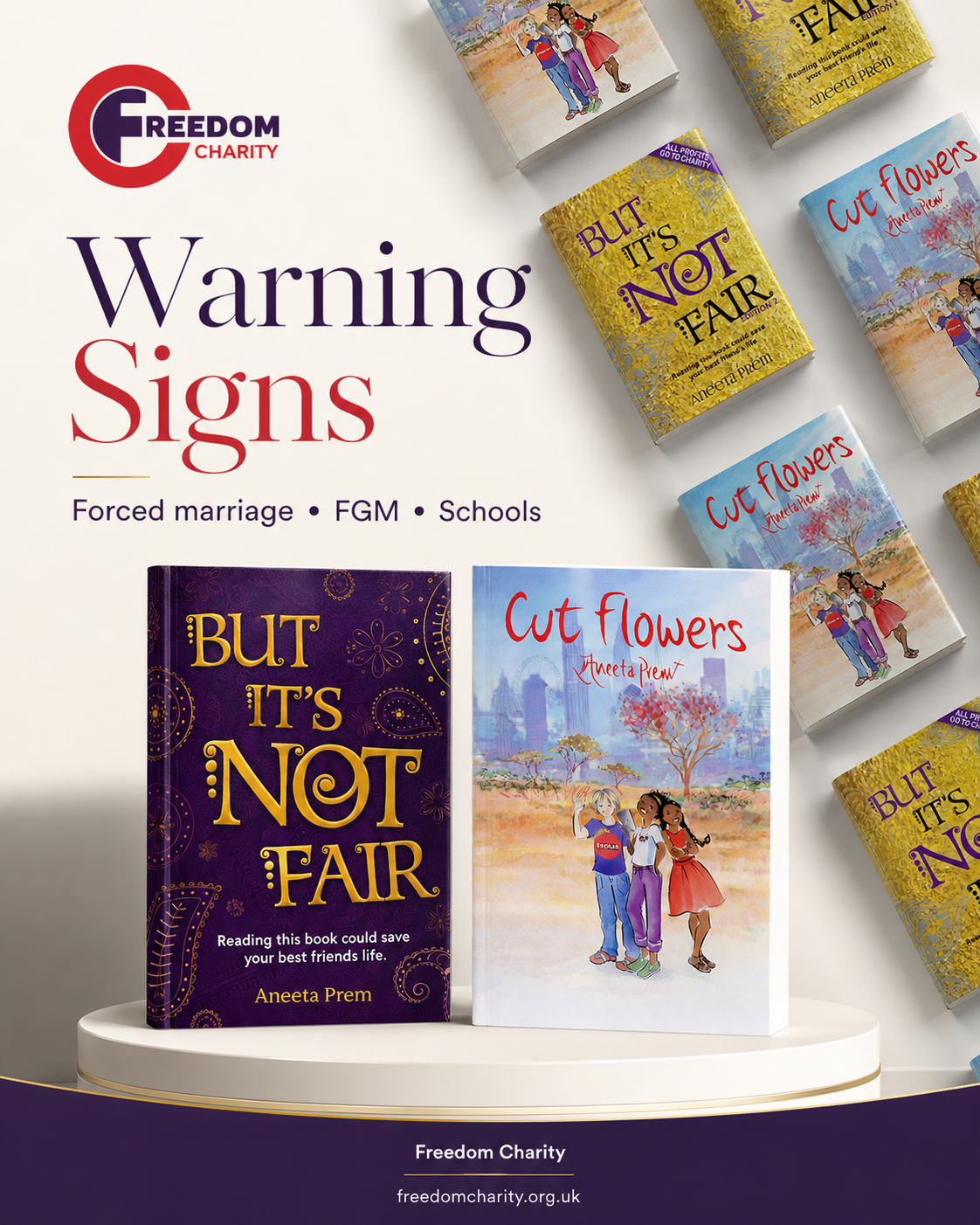
Forced Marriage and FGM Warning Signs Schools Must Never Ignore
Forced marriage and FGM warning signs schools notice can provide the first visible evidence that a child faces serious harm. A pupil may not use legal or safeguarding language. Instead, they may talk about a family trip, a ceremony, an engagement, pressure at home, fear of relatives, or worries about not returning after the holidays.
Every teacher, safeguarding lead and member of school staff has a role in noticing risk. Early action can prevent lifelong harm. In some cases, a child may only have one chance to speak.
If a child may be in immediate danger
If a child may be in immediate danger, call 999.
Where staff have a safeguarding concern, they should report it to the designated safeguarding lead immediately. They should not contact the family if doing so may increase risk. They should not attempt mediation. Instead, they should record the child’s words carefully and follow the school’s safeguarding procedures.
Schools can also use Freedom Charity’s helpline information and contact Freedom Charity for support, school visit enquiries or general safeguarding education queries.
Why this matters in schools
Forced marriage and FGM are not private family matters. They are serious safeguarding issues.
Children and young people may struggle to disclose abuse because they fear punishment, rejection, violence, shame or separation from their family. Some may love their family and fear the consequences of speaking out. Others may not understand that the law protects them from what adults plan for them.
Schools matter because staff see children regularly. As a result, they may notice changes in attendance, behaviour, friendship patterns, confidence, schoolwork or emotional wellbeing before anyone else.
What is forced marriage?
GOV.UK forced marriage guidance explains that forced marriage is illegal in the UK. It is a form of domestic abuse and a serious abuse of human rights.
Forced marriage happens when one or both people do not, or cannot, consent to the marriage and someone uses pressure or abuse. That pressure may involve physical threats, emotional control, psychological abuse, financial pressure or sexual violence.
In England and Wales, the law also makes it a criminal offence to do anything intended to cause a child to marry before their eighteenth birthday, even where no coercion takes place. The change followed the Marriage and Civil Partnership (Minimum Age) Act 2022, which raised the legal age of marriage and civil partnership to 18 in England and Wales.
Forced marriage is not the same as an arranged marriage. In an arranged marriage, both people freely agree. By contrast, in a forced marriage, one or both people do not have real choice.
Forced marriage warning signs schools may notice
A pupil may face forced marriage risk if staff notice:
- sudden anxiety about school holidays or overseas travel
- fear of travelling abroad
- unexplained absence, especially after a holiday
- failure to return to school after travel
- talk of an engagement, wedding or promise
- older siblings leaving education early or marrying young
- relatives monitoring the pupil’s phone, friendships or movement
- restrictions on clothes, friendships, subjects or activities
- withdrawal from friends or trusted adults
- a sudden drop in school performance
- signs of depression, self-harm, fear or panic
- a request for help that the pupil later withdraws
- concerns that the pupil has no control over travel documents
- a family history of forced marriage, domestic abuse or coercive control
One warning sign may not prove forced marriage. However, a pattern of concern must never be ignored.
What pupils may say
A child or young person may speak indirectly. For example, they may say:
- “I am going away and I do not know when I will be back.”
- “My family has arranged something for me.”
- “I have been promised to someone.”
- “I cannot say no.”
- “I will be in trouble if I tell anyone.”
- “My passport has been taken.”
- “I am scared of what will happen after the holiday.”
- “My brother or sister had to get married.”
- “I am not allowed to choose.”
Staff should write down the pupil’s own words. They should not tidy them up or reinterpret them.
What is FGM?
GOV.UK’s FGM resource pack describes female genital mutilation as the deliberate cutting, injury or alteration of female genital organs for non-medical reasons. FGM is illegal in the UK.
The multi-agency statutory guidance on FGM sets out responsibilities for agencies and professionals who safeguard and support girls and women affected by FGM.
Teachers in England and Wales have a mandatory duty to report known cases of FGM in girls under 18 to the police. This duty applies where a teacher discovers, through their professional work, that FGM appears to have happened. However, concerns, suspected risk or third-party information should still go through the school’s safeguarding procedures.
FGM warning signs schools may notice
A pupil may face FGM risk if staff notice:
- talk of a special ceremony
- references to cutting, becoming clean or becoming a woman
- anxiety before a family trip abroad
- a long absence from school after travel
- fear when holidays come up in conversation
- pressure to keep a secret
- a known family history of FGM
- older female relatives becoming unusually involved in travel plans
- comments that the pupil will travel for something important
- pressure to conform to family or community expectations
Some signs may appear before FGM takes place. Others may appear afterwards.
Signs that FGM may have happened
School staff may notice:
- difficulty walking, sitting or standing
- repeated toilet visits
- long periods away from the classroom
- pain or discomfort that affects movement
- reluctance to take part in PE
- sudden withdrawal or distress
- anxiety, low mood or fearfulness
- avoidance of medical or pastoral conversations
- a disclosure from the pupil or another child
Staff should not carry out intrusive questioning. Instead, they should listen, reassure, record and follow safeguarding procedures immediately.
Why holidays can increase risk
Risk can rise before Easter, summer and winter holidays. Families may arrange overseas travel with little notice. Some children may believe they are visiting relatives. Others may not discover the real reason for travel until it is too late.
Schools should pay close attention when a pupil becomes unusually anxious before travel, talks about a ceremony, fears not returning, or seems distressed about family plans.
Where immediate risk exists, schools must act quickly through safeguarding procedures. Delay can remove the opportunity to protect the child.
What school staff should do
Keeping Children Safe in Education sets out the legal duties that schools and colleges must follow to safeguard and promote the welfare of children and young people under 18.
If staff worry about forced marriage, FGM or dishonour abuse, they should:
- listen calmly
- take the concern seriously
- avoid promising secrecy
- reassure the pupil that they have done the right thing by speaking
- record the pupil’s words accurately
- note dates, names, travel plans and any immediate risks
- speak to the designated safeguarding lead without delay
- follow the school’s safeguarding policy
- contact children’s social care or police where required
- seek urgent advice if the child may travel abroad soon
In addition, Working Together to Safeguard Children supports multi-agency safeguarding practice where children face abuse, neglect or exploitation.
What schools must not do
Schools should not:
- dismiss the concern as cultural
- contact the family where doing so may increase risk
- attempt family mediation
- send the pupil home without considering immediate safety
- use relatives, friends or community members as interpreters
- alert potential perpetrators
- ask leading or repeated questions
- promise confidentiality
- wait for proof before acting
A safeguarding concern does not need proof before staff share it with the designated safeguarding lead. The duty is to recognise risk and act through the correct process.
Why children may not disclose clearly
Many children affected by forced marriage, FGM or dishonour abuse carry conflicting emotions. They may fear harm. At the same time, they may feel loyalty, guilt, shame or responsibility for protecting their family.
Some pupils may not know the law. Others may believe nobody will understand. Therefore, a child may test an adult’s reaction before saying more. Even a vague comment can matter.
Staff should avoid shock, judgement or disbelief. A calm response can help the child feel safe enough to continue.
The role of the designated safeguarding lead
The designated safeguarding lead should consider the information, assess immediate risk and follow local safeguarding procedures. Where necessary, the DSL should seek advice from children’s social care, police or specialist safeguarding services.
The DSL should also make sure records remain clear, factual and secure. Good records may include:
- the date and time of the concern
- the pupil’s exact words where possible
- observed behaviour
- travel dates or destination if known
- names of people mentioned
- action taken
- advice received
- referrals made
- follow-up arrangements
Records should distinguish fact from opinion. Staff should also avoid assumptions about culture, religion, community or family background.
Teaching prevention through PSHE
Schools can help prevent abuse by teaching pupils about consent, choice, personal safety, healthy relationships and the right to ask for help.
Freedom Charity’s PSHE educational resources help schools discuss forced marriage, FGM and dishonour abuse safely. In addition, the charity’s forced-marriage and FGM lesson plans awarded the PSHE Association Quality Mark support prevention before a child reaches crisis point.
These lessons should never place the burden on children to protect themselves. Responsibility sits with adults, professionals and agencies. However, education can help a child recognise danger earlier and speak to someone they trust.
Freedom Charity resources for schools
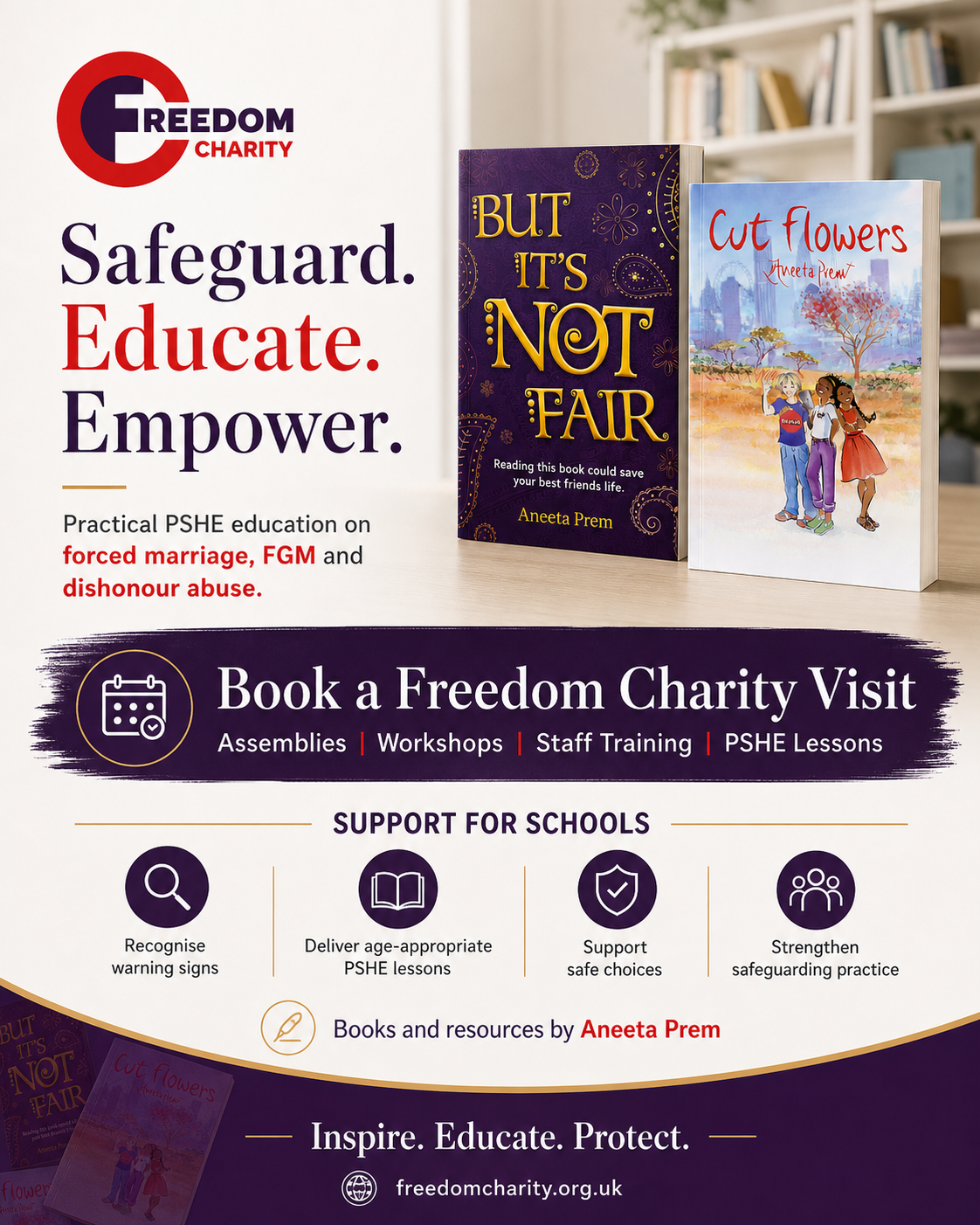
Freedom Charity supports schools with safeguarding education on forced marriage, FGM and dishonour abuse.
Schools can use Freedom Charity’s schools information to learn more about workshops, staff training and safeguarding education. They can also book a Freedom Charity visit for assemblies, lessons or professional training.
Freedom Charity’s resources help schools move from awareness to prevention. They give staff and pupils safe language before a child reaches crisis point.
Freedom Charity’s books help young people understand coercion, consent, pressure and choice in an accessible and safe way. But It’s Not Fair addresses forced marriage and coercive control. Meanwhile, Cut Flowers supports safe classroom discussion about FGM, safeguarding, courage and speaking out.
Schools, professionals and supporters can also visit the Freedom Charity shop, buy the Red Triangle badge against FGM, or donate to Freedom Charity to support prevention work with children and young people.
A clear message for every school
Schools must take forced marriage and FGM warning signs seriously. A pupil may not disclose everything at once. They may speak in fragments, hints or changes in behaviour.
The safest approach is simple: listen, record, report and act.
Professionals do not need certainty before raising a concern. They need curiosity, clear safeguarding procedures and the courage to act early.
A child may only have one opportunity to ask for help. The adult who listens may prevent lifelong harm.
Aneeta Prem / London / 4 May 2026