


If the world really wants to end FGM, it cannot keep speaking only to girls.
Female genital mutilation is one of the most violent acts an adult can inflict on a child. It is done to healthy bodies. There is no medical benefit. The pain can be extreme and the impact can last a lifetime. Girls live with infections, sexual pain, difficult births and deep emotional scars. Even with laws and campaigns in place to end FGM, millions of girls are still at risk.
To end FGM, we have to change what boys and men accept, expect and demand. Freedom Charity’s Not In My Name project, our PSHE Association-accredited books But It’s Not Fair, and Cut Flowers, and the red triangle badge all start from that simple point.
The global picture and why we still need to end FGM
United Nations agencies estimate that more than 230 million girls and women alive today live with the consequences of FGM. The practice is most common in parts of Africa, Asia and the Middle East, but it is also present in many other countries, including the UK, through migration and diaspora communities.
Some girls are cut as babies. Others are taken “on holiday” and return silent, withdrawn and in pain. In nearly every setting, FGM is used to control girls’ bodies and sexuality. Families talk about honour, cleanliness, marriage and tradition. Underneath those words sits fear.
The harm does not fade with age. Women describe chronic pain, difficult periods, fear of intimacy, complications in labour, flashbacks and shame. Many never receive proper medical care or psychological support and never find the words to explain what was done to them.
(You can link “United Nations agencies estimate” to an external UN or UNICEF FGM statistics page.)
Why boys matter if we want to end FGM
For years, most work around FGM focused on girls and women. That focus mattered, but it left out half the people who shape decisions. Having the ‘not in my name’ end FGM is a realistic goal.
In many practising communities, men and boys influence whether a girl is cut. A family may believe that no man will marry an uncut girl. Older male relatives may stay quiet or quietly approve. Boys may grow up hearing that “this is just what happens” and never question it.
When boys and young men say clearly that they do not want FGM in their families or communities, the rules start to change.
-
A boy who refuses to accept FGM as a condition of marriage breaks the old bargain.
-
A brother who asks questions about a planned “special trip” can help keep his sister safe.
-
A class of boys who understand the truth about FGM can grow into fathers, husbands, soldiers, doctors, teachers and faith leaders who will work to end FGM, not ignore it.
This is the heart of Not In My Name.
Not In My Name: bringing boys into the work to end FGM
In schools, colleges, youth groups and cadet units, Not In My Name brings boys and girls together to learn the facts. Sessions use clear, age-appropriate language and do not hide behind vague phrases.
A typical Not In My Name session:
-
Explains what FGM is in simple medical terms.
-
Sets out the physical and emotional harm without shock tactics.
-
Talks openly about honour, reputation, peer pressure and fear.
-
Gives clear routes to help and protection for anyone who is worried.
At the end, boys receive an invitation to make a personal promise. They commit that in their families, future relationships and communities, FGM will not happen in their name. They say out loud that they do not want any future wife, daughter, sister or cousin to be cut.
This is more than a slogan. It is a turning point. When boys say “Not in my name”, they step away from silence and become part of the movement to end FGM.
(On the Freedom site, link “Not In My Name” here to your main project page.)
Books that turn awareness into protection: But It’s Not Fair and Cut Flowers
Assemblies and one-off talks can open eyes. Books help change lives.
Freedom Charity created two PSHE Association-accredited novels that teachers and professionals now use across the UK:
-
But It’s Not Fair introduces forced marriage and dishonour-based abuse through the story of a British girl and her friends.
-
Cut Flowers explores FGM in the same way, through characters and everyday scenes rather than lectures.
These stories help young people see how abuse can hide inside ordinary family life. They show how friends, teachers, school nurses, soldiers, police officers and doctors can notice warning signs and act.
Freedom Charity is proud of the reach these books already have:
Boys are part of the solution. Freedom Charity is proud to work with schools and colleges across the UK, where more than 100,000 children have received our PSHE Association accredited books But It’s Not Fair and Cut Flowers, using them to learn about FGM, dishonour based abuse and how to get help.
For a pupil reading at home, these books may be the first time they realise that what is happening in their family is not normal and not legal. For a teacher, soldier, police officer or doctor, they offer a safe way to start difficult conversations about FGM, forced marriage and wider dishonour-based abuse.
When somebody searches online for ways to end FGM, we want them to find Freedom Charity, But It’s Not Fair, Cut Flowers and a clear route from information to action.
(Add internal links from “But It’s Not Fair” and “Cut Flowers” to each book’s page. You can also link “PSHE Association accredited” to the PSHE Association website as an outbound link.)
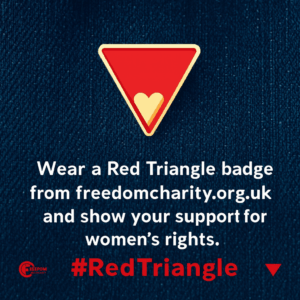 The red triangle badge: a symbol for people who want to end FGM
Symbols give people a way to show what they stand for before they say a word. Freedom Charity created the red triangle badge as an international symbol against FGM.
The triangle works as both a warning and a point of change. Red signals urgency and courage. When a teacher, nurse, social worker, soldier or student wears the red triangle, they send a clear message: FGM is never acceptable here.
The badge does more than sit on a lapel.
-
In a school, it tells pupils that staff understand FGM and will listen.
-
In a hospital or GP practice, it reassures survivors that someone “gets it”.
-
At community events or places of worship, it keeps the issue visible in spaces where silence is common.
Every badge sold also supports work on the ground. Freedom Charity links red triangle badge sales to book donations. When someone buys a badge, they help us donate copies of “But It’s Not Fair” and “Cut Flowers” to schools and young people who might otherwise never see them.
A small badge on one jacket can mean a whole class gets a lesson that helps to end FGM.
(Add an internal link on “red triangle badge” to your shop or badge page.)
How you can help to end FGM
This is a global issue, but every decision is made somewhere very local: in a school, clinic, family home, barracks or community centre. Whatever your role, you can help to end FGM.
You can:
-
Bring Not In My Name into your school, college, youth group or unit.
-
Use But It’s Not Fair and Cut Flowers in PSHE, citizenship lessons, book clubs, safeguarding training and professional development.
-
Order and wear the red triangle badge, and explain what it stands for when people ask.
-
Review your organisation’s safeguarding policy and make sure it speaks clearly about FGM and dishonour-based abuse.
-
Challenge the idea that FGM is “culture” or “tradition” rather than child abuse.
Countries that combine strong law, community work and education have already started to reduce FGM rates. The change is real, but it is far too slow. Every missed year means another generation of girls at risk.
Not In My Name, the red triangle badge, and the books But It’s Not Fair and Cut Flowers show a different future. Boys become part of the solution, not silent bystanders. Girls know that their bodies belong to them. Step by step, with honest work and clear voices, we can end FGM.