



What Is Immigration-Related Abuse?
Immigration-related abuse happens when someone uses passports, visa status, sponsorship, documents or fear of deportation to control a victim. Freedom Charity explains what it means, why the CPS now highlights it more clearly, and why it must be treated as abuse, not an immigration issue.
What Is Immigration-Related Abuse?
By Aneeta Prem | Freedom Charity | 8 March 2026
Immigration-related abuse is a form of control. An abuser uses visa status, passports, documents, sponsorship or fear of deportation to trap a victim. In February 2026, the Crown Prosecution Service said its strengthened guidance on so-called honour-based abuse now explicitly includes immigration abuse for the first time. As a result, prosecutors should recognise these patterns more clearly and build stronger cases under existing law.
This matters because professionals can miss the abuse at the start. Too often, they see only an immigration problem and overlook the coercion underneath it. For example, a victim may stay silent because a husband, in-law or relative has told her she will be deported, detained or separated from her children if she asks for help. In other words, fear becomes the tool of control.
What does immigration-related abuse mean?
Immigration-related abuse happens when someone uses another person’s immigration insecurity as leverage. That may involve a passport, visa papers, sponsorship, immigration applications, travel documents or threats about removal from the UK. On the surface, the issue may look administrative. In reality, it is about power.
The CPS press release uses the terms immigration abuse and immigration-related exploitation. On this page, Freedom Charity uses immigration-related abuse because it is plain, accurate and easier for readers to find in search. Either way, the meaning is the same: an abuser uses immigration fear as a weapon.
Why this matters now
On 26 February 2026, the CPS announced that spiritual abuse and immigration abuse had been added to its guidance for the first time. It said the aim was to help prosecutors tackle emerging harmful practices and understand the wider pattern around them. Importantly, the guidance links these cases to family pressure, cultural expectations and coercive control.
Meanwhile, the Government moved in the same direction. On 25 February 2026, it announced a statutory definition of so-called honour-based abuse and a power to issue statutory guidance through amendments to the Crime and Policing Bill. According to the Government, this should improve frontline understanding, strengthen victim support and reduce the risk that key information is missed. At the same time, ministers made clear that this would not create a new specific criminal offence.
What immigration-related abuse looks like
Immigration-related abuse can take many forms. An abuser may take a passport. He may threaten deportation. In other cases, he may lie about a victim’s rights, block an application, control money, restrict travel or threaten to report the victim to the authorities. In each case, the purpose is the same: to create fear and keep the victim dependent.
Sometimes the pattern is even more serious. Someone may take the passport of a woman born in the UK and tell her she cannot return unless she becomes pregnant or complies with demands linked to marriage or immigration status. In that situation, documents, movement and pregnancy become tools of control. This is not a travel problem. It is coercion and abuse.
Aneeta Prem, founder of Freedom Charity, said: “When immigration status, documents or fear are used to trap a woman in abuse, that is not bureaucracy. It is coercion.”
Why victims may not ask for help
Many victims stay silent because they are frightened. Some think the police will not understand. Others believe they have no rights. In some cases, abusers falsely tell them they cannot speak to a doctor, teacher, solicitor, social worker or domestic abuse service. In other cases, relatives or in-laws add pressure, shame or threats.
Family reputation can make things worse, especially in marriage-related cases. At the same time, the victim may depend on the abuser for housing, money, documents or contact with children. Because of that, leaving or speaking out can feel impossible.
Why is this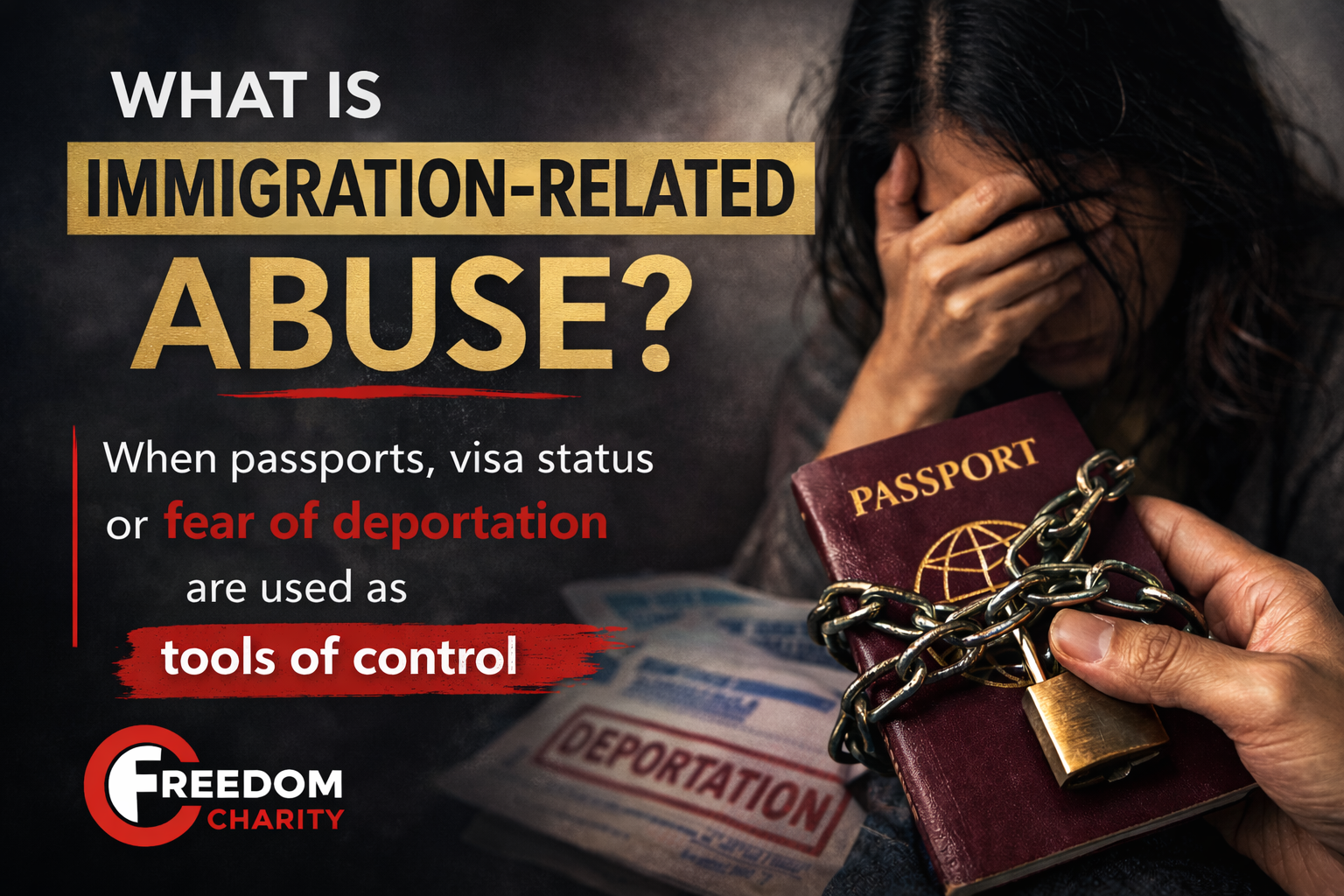 abuse, not an immigration issue
This point matters. Immigration-related abuse is not just about forms or visas. Instead, it is about control. Immigration status may be the mechanism, but coercion is the harm.
The CPS has made that distinction clear. Its revised guidance does not create a stand-alone offence called honour-based abuse. Rather, prosecutors still use existing offences and legal frameworks, depending on the facts. These may include coercive or controlling behaviour, assault, stalking, harassment, sexual offences, forced marriage offences and female genital mutilation offences. So the updated guidance helps prosecutors identify the abuse pattern around those offences more clearly.
Recognition is the key issue. If professionals see only a visa problem, they may miss the abuse. If they miss the abuse, they may fail to gather the right evidence. Without the right evidence, a case may never reflect the true scale of the harm. That is why guidance matters.
Why does Freedom Charity include this in dishonour abuse
Freedom Charity uses the term dishonour abuse because there is no honour in using immigration status to trap a victim. Nor is there any honour in withholding a passport. Threatening deportation is abuse, not honour. Using dependency and fear to force silence is abuse, too.
Official agencies still use the established phrase “honour-based abuse”. That wording remains important for legal accuracy and search clarity. However, Freedom Charity uses the term “dishonour abuse” because it names the conduct more honestly.
What professionals should look for
Professionals should look beyond the paperwork. For example, warning signs may include a victim who is frightened to discuss immigration matters, a partner or relative who controls all documents, repeated threats about deportation or sponsorship, sudden isolation from services, pressure linked to marriage or family reputation, or conflicting stories from controlling relatives.
In addition, these cases may involve more than one perpetrator. Family members, in-laws or wider community networks may all play a part. That is one reason why multi-agency guidance matters. Abuse of this kind can stay hidden, collective and easy to minimise unless professionals ask the right questions early.
The key point
Immigration-related abuse uses immigration insecurity as a method of control. It can be psychological, financial, practical and deeply frightening. It can sit inside domestic abuse, forced marriage, dowry abuse or wider dishonour abuse.
Nobody should dismiss it as an immigration matter alone. Immigration status may form part of the mechanism. The harm is coercion.
Sources
Crown Prosecution Service, Spiritual and immigration abuse included in CPS ‘honour’-based abuse guidance for first time, 26 February 2026.
Crown Prosecution Service, ‘Honour’-Based Abuse, Forced Marriage, and Harmful Practices Guidance.
UK Government, New laws to protect victims of ‘honour’-based abuse, 25 February 2026.