



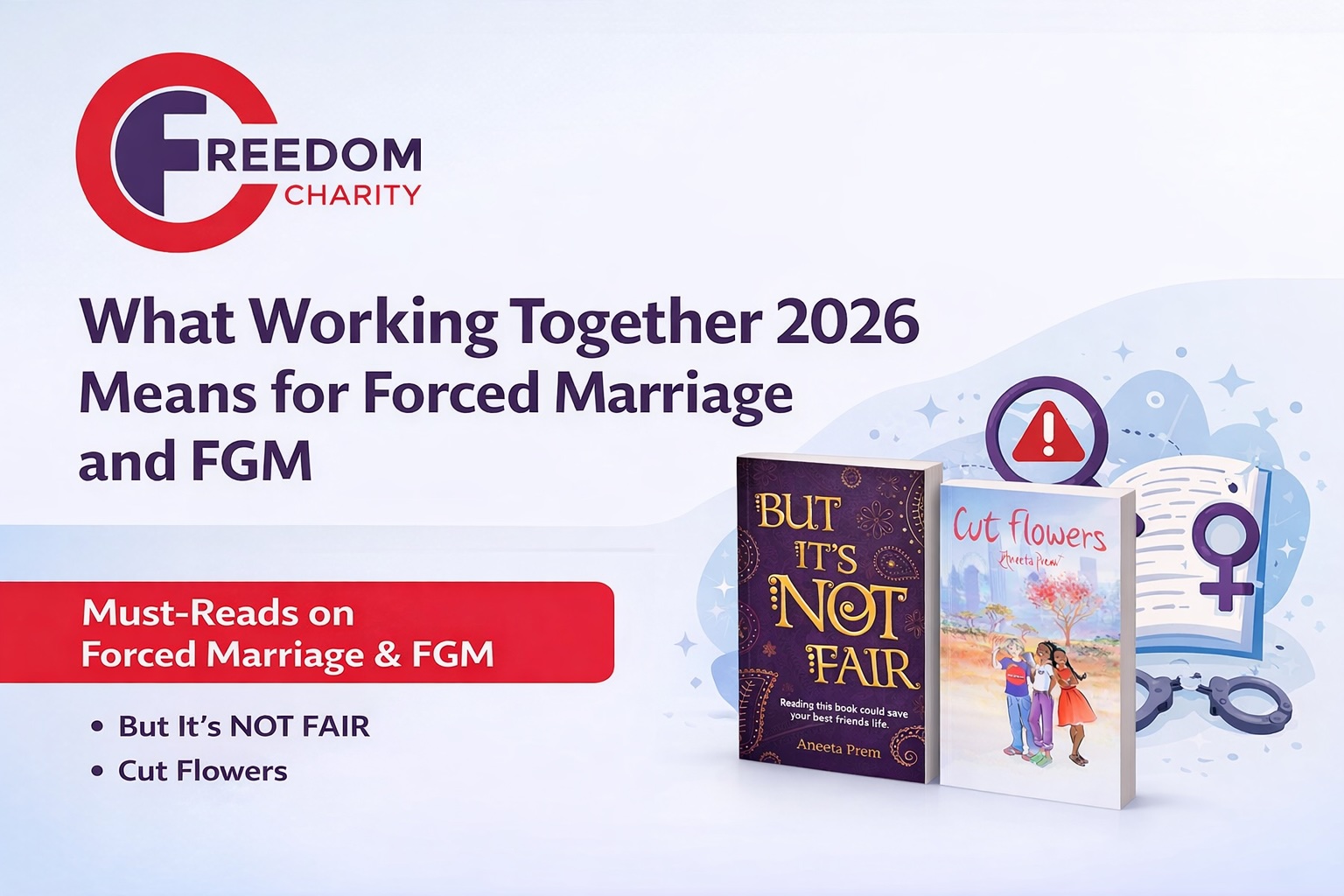
What Working Together 2026 Means for Forced Marriage and FGM
By Aneeta Prem
London | 28 March 2026
On 18 March 2026, the Department for Education updated Working together to safeguard children. This is statutory guidance for England. It applies across schools, social care, police, health and other safeguarding partners. GOV.UK also says organisations should follow statutory guidance unless they have a good reason not to.
This update matters because it is not just a policy refresh. The government’s summary says the 2026 version strengthens anti-discriminatory practice. It also adds content on honour or faith or belief-based abuse. Therefore, professionals now have less room to treat forced marriage and FGM as side issues or specialist topics for someone else.
What has changed
The key point is simple. Forced marriage and FGM sit within mainstream safeguarding. They are not awkward family matters. They are not cultural issues to tiptoe around. Instead, they are safeguarding concerns that need clear action. This is the practical meaning of the new guidance and the wider legal framework around these harms.
That matters because many cases still go wrong in practice. Staff may minimise warning signs. Leaders may record concerns too weakly. Agencies may delay action because they worry about getting it wrong. However, late action can leave a child at even greater risk.
What professionals need to do now
Schools, DSLs, social care, police and health staff need to spot risk early. They also need to record concerns clearly. Then they need to share information lawfully and act in time. In practice, that means staff must notice fear, secrecy, pressure linked to marriage, talk of travel abroad, wider family control, and distress linked to reputation or shame. Those signs do not prove abuse on their own. However, they do require professional curiosity and proper safeguarding steps.
The legal position is already clear. GOV.UK says forced marriage is illegal in the UK. It also says forced marriage is a form of domestic abuse and a serious abuse of human rights. GOV.UK also states that FGM is illegal in England and Wales. In addition, teachers and regulated health and social care professionals must report known cases of FGM in under-18s to the police.
Why training matters
Written guidance helps, but it does not do the job on its own. A policy document cannot ask follow-up questions in a live case. It cannot help a DSL judge whether a disclosure needs urgent action. It also cannot support a frightened child in the moment she chooses whether to speak. So, organisations need more than awareness. They need staff who know what to do.
That is why training matters. GOV.UK’s forced marriage guidance says professionals need training and guidance so they can give effective advice and support. Therefore, the issue is not only what the law says. The issue is whether staff can use that knowledge safely and well when a child is at risk.
Why Freedom Charity matters
This is where Freedom Charity is relevant. Freedom says it provides a 24/7 helpline answered by professionals who understand dishonour abuse. It also says it offers an app that puts a victim two clicks away from help. In addition, Freedom states that it delivers professional training and works with schools on prevention and safeguarding.
Freedom’s PSHE page is also important. It says the charity’s lesson plans on forced marriage and FGM for Key Stages 3 and 4 have the PSHE Association Quality Mark. That gives schools and professionals something practical to use, not just something to read. As a result, the charity sits in the space between policy and action.
What serious organisations should take from this
Public bodies, schools, NHS services, police forces, employers and funders should ask a simple question. Can our staff recognise the signs? Can they record concerns properly? Can they act early enough? If the answer is uncertain, that gap needs attention now.
That is why Working Together 2026 matters. It has made the safeguarding expectation clearer. Now organisations need to make sure their people can meet it. Expert training, clear resources and credible support are part of that work, not extras.
Call to action
Need expert safeguarding training or practical advice on forced marriage, FGM or dishonour abuse?
Freedom Charity provides specialist training, PSHE-accredited educational resources, a 24/7 helpline and practical support for schools, professionals and organisations.
FAQs
What is Working Together 2026?
It is the updated statutory safeguarding guidance for England, published by the Department for Education in March 2026.
Does it matter for schools and DSLs?
Yes. The guidance applies across the safeguarding system, and schools are part of that system.
Why does it matter for forced marriage and FGM training?
Because staff need to recognise risk, respond lawfully and protect children in practice, not just know the policy wording.
What Working Together 2026 Means for Forced Marriage and FGM?
Forced Marriage
Female Genital Mutilation
PSHE Educational Resources
Working together to safeguard children
Working together to safeguard children 2026: summary of changes