



Would you call her parents? Freedom launches 16 Days campaign
Freedom Charity | Campaign news ·
A call home can seem like the right response when a pupil says she fears being forced into marriage. But in some cases it could increase the danger. Freedom Charity is making that difficult first decision the starting point for its 2026 campaign.
With the global 16 Days of Activism beginning on 25 November, the UK safeguarding charity has launched 16 Days. 16 Decisions. What Would You Do? — an interactive series examining how ordinary decisions can affect the safety of children and adults at risk of forced marriage, female genital mutilation (FGM), Dishonour Abuse and related harms.
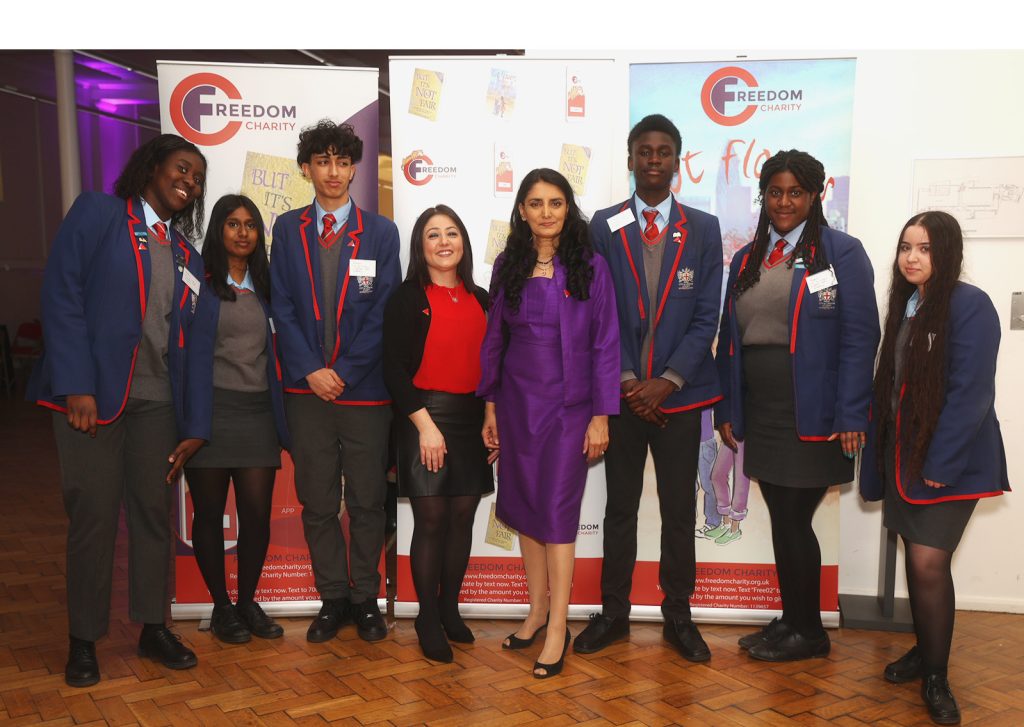
The campaign is already available on Freedom’s website. It will spotlight one decision each day from 25 November to 10 December 2026, while all 16 stories and explanations remain accessible throughout.
One question that changes the conversation
The opening scenario asks: Would you call her parents? It describes a pupil who fears she may be forced into marriage. The scenario is an educational illustration, not a claim about an identifiable survivor.
In most circumstances, speaking to parents about a child’s welfare may feel routine. Suspected forced marriage requires a different risk assessment. The UK government’s multi-agency forced marriage guidance warns that approaching family members can prompt them to move a child, accelerate travel or bring forward a marriage.
The lesson is not that professionals should improvise or make decisions alone. It is that they must recognise the particular risk, safeguard the person, seek appropriate specialist advice and follow the relevant statutory and organisational safeguarding procedures.
Sixteen practical decisions, not sixteen slogans
Visitors can turn each campaign card to reveal the issue, then read a fuller account of the safeguarding considerations and the action that may be needed. The questions cover recognising a disclosure, avoiding harmful assumptions, understanding FGM-related responsibilities, responding to digital control and recognising when apparently helpful intervention could cause further harm.
Three principles run through the campaign:
- Listen and assess risk. A disclosure should be taken seriously, without stereotyping individuals or communities.
- Do not alert potential perpetrators. Where forced marriage or related abuse is suspected, contacting family members or attempting mediation can increase risk; follow specialist guidance.
- Use established safeguarding routes. Keep the person’s immediate safety central and involve the responsible safeguarding, statutory or specialist services as appropriate.
These principles are educational signposts, not a substitute for professional case-by-case judgement or current safeguarding guidance. The campaign links readers to relevant government and specialist sources.
Why the campaign has a place in 16 Days of Activism
The international 16 Days of Activism movement draws attention to violence against women and girls. Freedom’s contribution focuses on a question that can be overlooked in awareness campaigns: what happens after somebody recognises that a person may be at risk?
Instead of simply asking people to condemn abuse, the series invites schools, community organisations, employers and the wider public to consider the consequences of an actual safeguarding choice. Freedom Charity is running the initiative independently; it does not claim United Nations endorsement.
Explore the campaign and contact Freedom
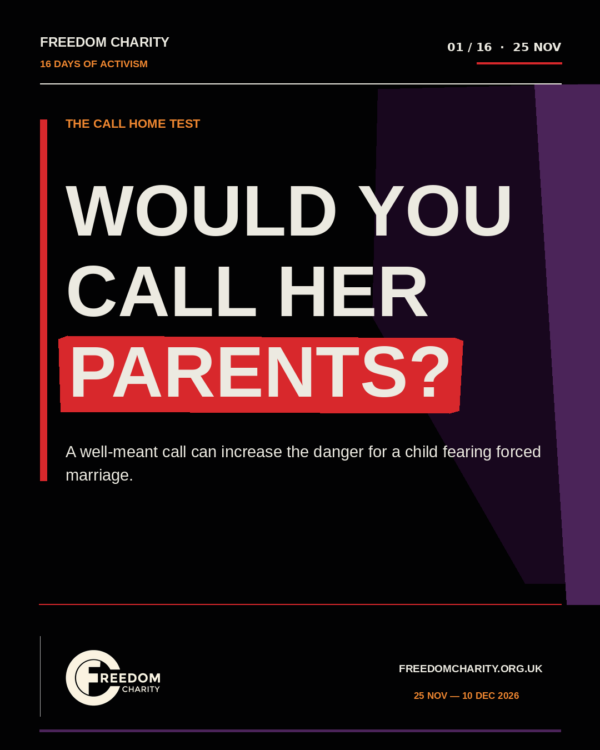
Read all 16 safeguarding decisions and turn the interactive cards. The page also provides guidance, further sources and options to support Freedom’s prevention and education work.
Journalists and producers can find background information, original archive materials and an interview enquiry route through Freedom Charity’s media centre.
Safeguarding: Anyone concerned about their own safety or someone else’s should use appropriate professional, statutory or specialist support. Freedom’s helpline page explains its service and signposting. In an immediate emergency in the UK, call 999.
UK Grooming Gangs Inquiry
Dishonour Abuse Training for Professionals
Dishonour Abuse and CPS Guidance
Sierra Leone Child Marriage Prosecution
Transnational Marriage Abandonment
Volunteer with Freedom Charity
Child Marriage Law UK
Immigration Status Abuse
Why Give to Freedom?
Freedom Charity is a UK safeguarding charity working to prevent forced marriage, female genital mutilation (FGM) and Dishonour Abuse.
Donations help sustain education, safeguarding resources, professional training, public awareness and practical routes to help. Freedom does not claim that a particular donation amount guarantees an individual outcome. We explain what the charity does, publish evidence where it is available and let supporters choose the way they want to help.
Why support Freedom?
Freedom has focused on forced marriage and FGM since 2009. Its work includes school and professional education, safeguarding books and resources, the Freedom App, public campaigns and information for people seeking help.
Supporters can check Freedom’s Evidence & Impact and Governance & Due Diligence pages before deciding to give.
Ways to give
- Give once or monthly: use Freedom’s secure donation page and add Gift Aid if you are eligible.
- Leave a gift in your Will: read the free Gifts in Wills guide and information for solicitors and executors.
- Fund or partner with Freedom: trusts, foundations, philanthropists and companies can discuss substantial, core or restricted funding before making a commitment.
- Fundraise: support Freedom through a school, workplace, community group, birthday or challenge.
- Send a virtual card: choose a Freedom eCard and make an optional donation.
Donate to Freedom Gifts in Wills Funding & partnerships
What your support helps sustain
Freedom’s charitable work includes prevention and safeguarding education, specialist information, resources for schools and professionals, public awareness and routes to appropriate help. Unrestricted donations give the trustees flexibility to use funds where they are most useful within the charity’s purposes.
Freedom Charity is registered in England and Wales, charity number 1139657.